The Wave-Particle Duality: Its History and Current Status
The historical vicissitudes of wave–corpuscle duality (Olivier Darrigol)
At the turn of the twentieth century, there was a broad consensus that matter was corpuscular and light was wavelike. Early attempts to challenge this fundamental asymmetry were met with justifiable skepticism. We will examine the arguments that ultimately convinced the majority of physicists that both matter and light possessed both corpuscular and wave properties. In doing so, we will encounter a variety of interpretations of this duality, shaped by the philosophical predispositions of the actors involved. Special attention will be devoted to Niels Bohr’s position and to its compatibility with recent experimental manifestations of wave–corpuscle duality.
Raising Schrödinger ‘s kittens: On the Universality of the Wave-Particle Duality (Markus Arndt)
While Louis de Broglie postulated in 1923 that all matter is accompanied by an « oscillatory phenomenon in phase with a wave » and believed this to “solve almost all the problems brought up by quanta”, Erwin Schrödinger speculated in 1926 that “material points…are nothing but wave systems” and conceded that « this extreme conception may be wrong » but that treating “motion of material points, has led to such grave difficulties”. Both pioneers of quantum physics were bold in their claims, without any backup by experimental observation.
A century later, the wave nature of matter has been observed from electrons over atoms to fullerenes, vitamins and polypeptides, massive macromolecules, and most recently metal nanoparticles beyond 175,000 atomic mass units, covering more than eight orders of magnitude in particle mass. The de Broglie wavelength can be femtometers small, 100,000 times smaller than the particle itself, or micrometers wide in ultra-cold atoms.
I will discuss key developments and applications with electrons, neutrons and atoms and focus on experiments at the University of Vienna, where we use in particular near-field Talbot–Lau interferometry on atoms, molecules, clusters of atoms and clusters of molecules.
Heisenberg’s uncertainty relation is key in the preparation of coherence and delocalization, and the act of projective measurement has become a useful beam splitting mechanism for matter-waves. Decoherence by collisions or radiation is measured quantitatively and is interpreted, quantitatively equivalently, from three different philosophical perspectives: from Heisenberg’s microscope and Bohr’s complementarity to decoherence theory that builds on entanglement with an ignored environment.
The appearance of nanoscale interference fringes is not only proof for one of the most unusual properties in physic but also at the heart of many modern applications in precision metrology: Quantum interference turns atoms in outstanding inertial sensors and molecule interferometers into devices that can measure electric, magnetic, optical and structural properties of clusters and molecules with high sensitivity

Location : Institut de Science et d’Ingénierie Supramoléculaires (ISIS), Strasbourg
Date : Thursday 8th October 2026, Starting at 16:00
Informations
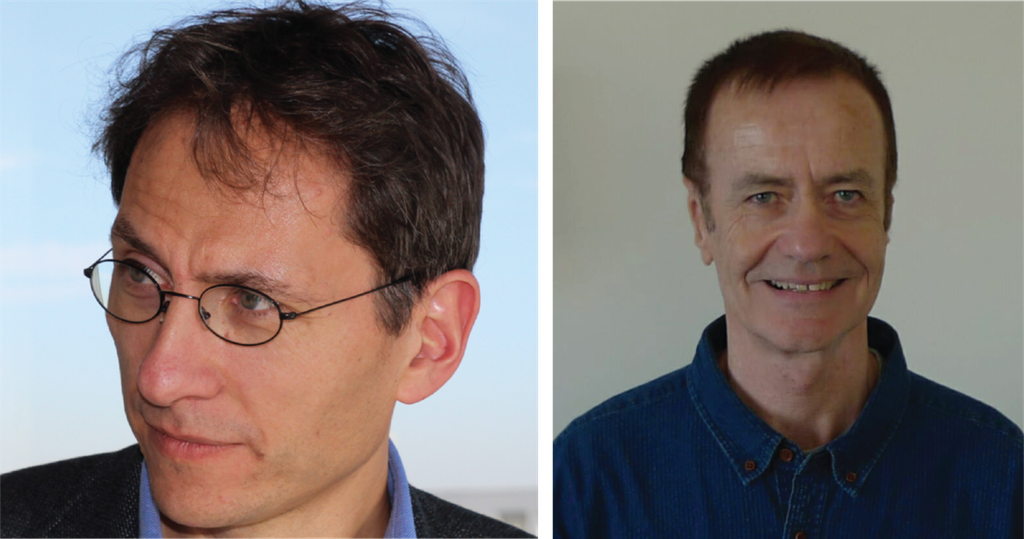
Our speakers: Markus Arndt is a professor of quantum nanophysics at the University of Vienna. His research focuses in particular on the interference of matter waves with complex molecules and nanoparticles. He has received several major awards, including the Erwin Schrödinger Prize from the Austrian Academy of Sciences; Olivier Darrigol is a research director emeritus at the CNRS and a professor emeritus at Paris Cité University, and a member of the SΦHERE laboratory. A historian and philosopher of science, he is the author of numerous works devoted in particular to electrodynamics, quantum mechanics, and fluid mechanics. He has received several honors, including, most recently, the Medal for the History of Science and Epistemology from the French Academy of Sciences, in recognition of his exceptional contributions to the history and philosophy of physics.
The conferences will be held in English and will be followed by a round table discussion.